Ha Long Bay – Cat Ba
After another long sleeper bus ride from Ha Giang, we were on our way to our next destination: Cat Ba!
When we arrived, we got dropped off somewhere on the island, but there was one thing we didn’t know yet: there is no Bolt on Cat Ba. So we accepted the offer of a local man with a scooter, who somehow managed to transport both of us and our suitcases to our next stay. We stayed in another homestay with a local family. They were kind, but communication was difficult at times because they spoke very little English. Sometimes even the simplest questions became a challenge, so we used Translate and Whatsapp to communicate.
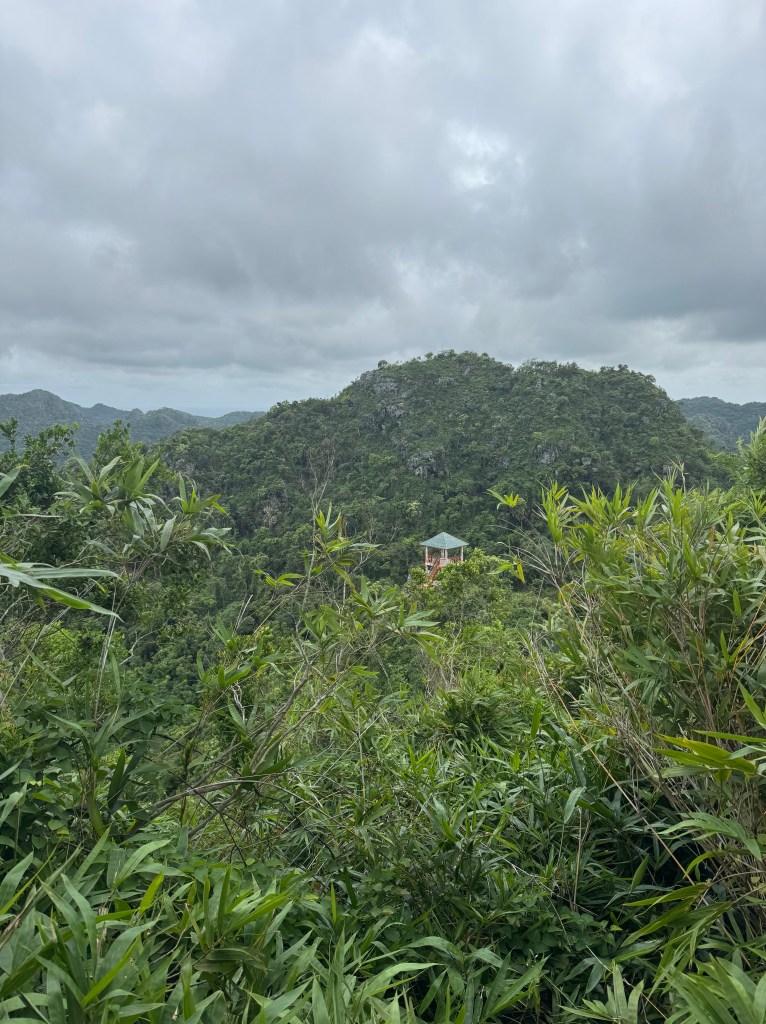
On our first full day, the father and uncle of the family brought us to Cat Ba National Park. Hidden within the island is a beautiful piece of jungle, and the park itself is a UNESCO-recognized biosphere reserve because of its biodiversity of plants and animals. Entrance was VND 80,000 (€3.20) per person, and the ticket also included access to the Trung Trang Cave if visited on the same day.
Before starting our hike, we had lunch at a small local restaurant near the entrance for a very good price. We did not really have a route planned and simply started walking. The hike was nice, surrounded by jungle and nature, including colorful crabs, though the heat was quite intense at times. Afterwards, we continued towards the caves. At the end of the afternoon, we called a taxi driver whose number we had received on the first day on the island. He brought us to one of the beaches where we spent the rest of the afternoon relaxing by the sea.
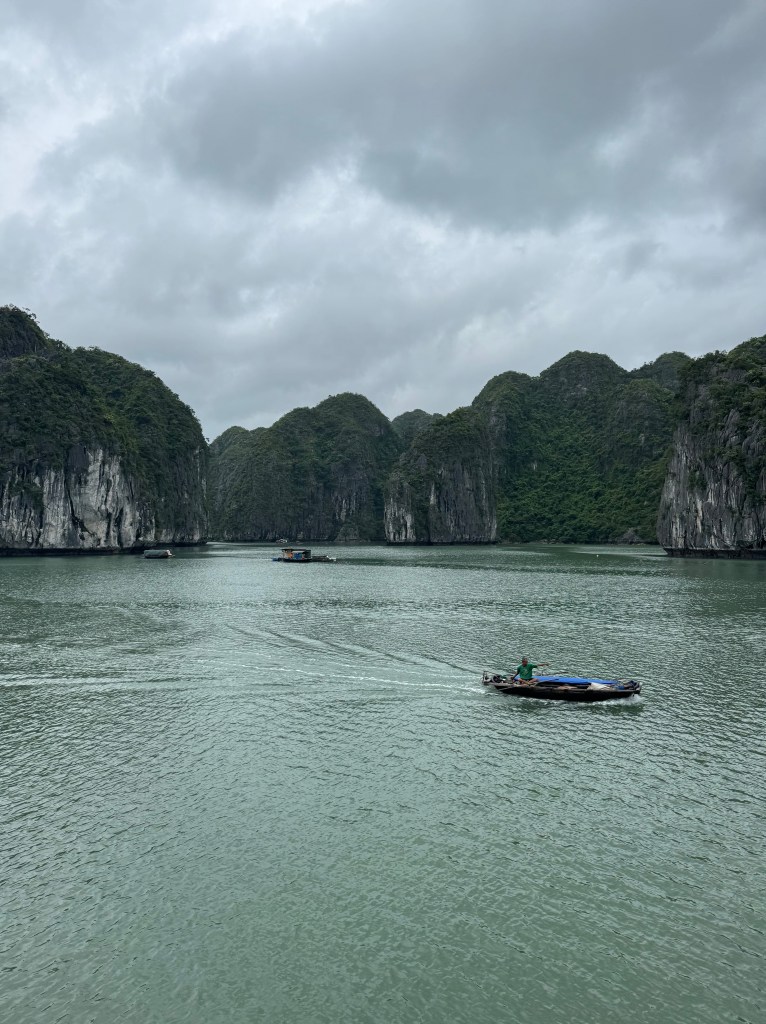
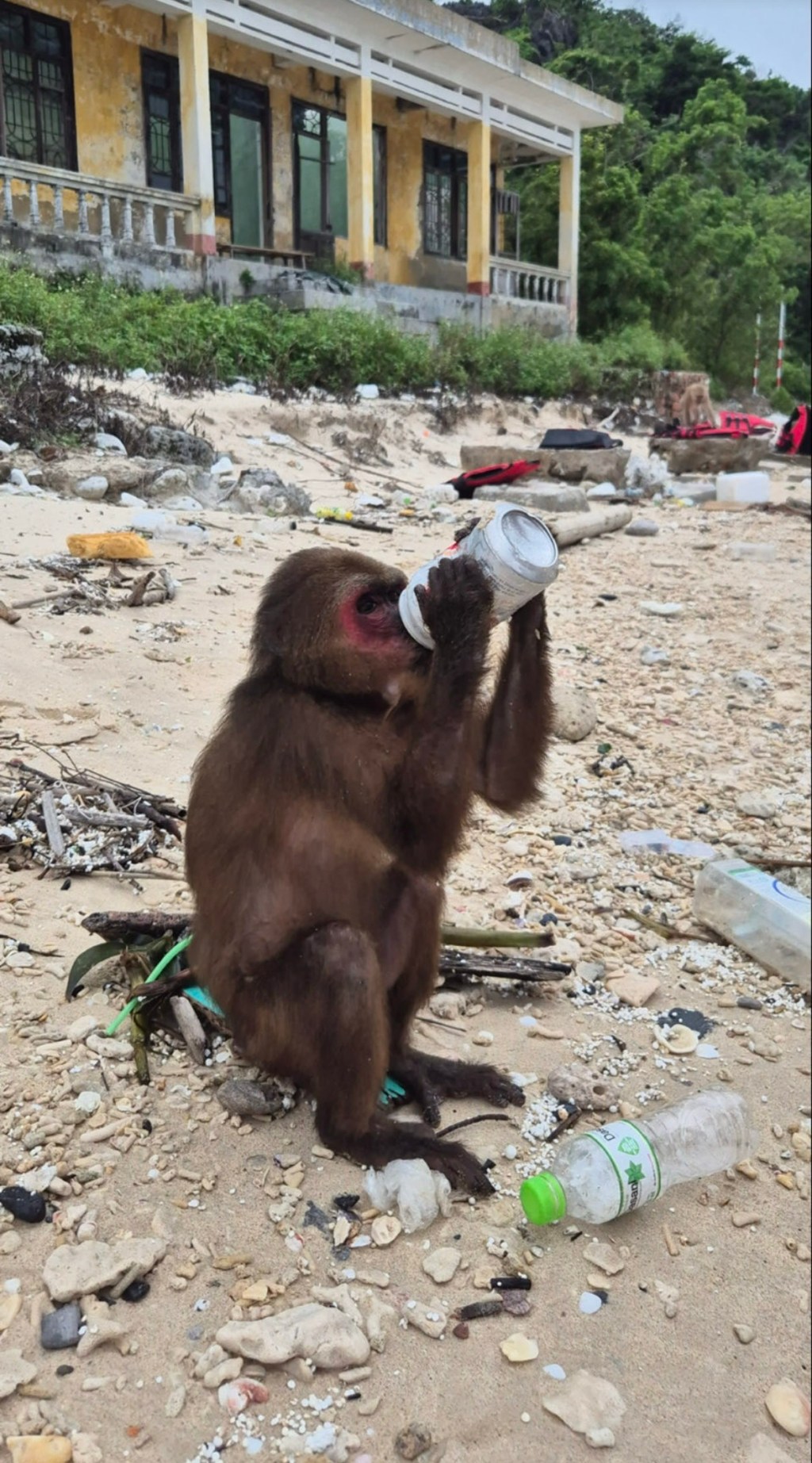
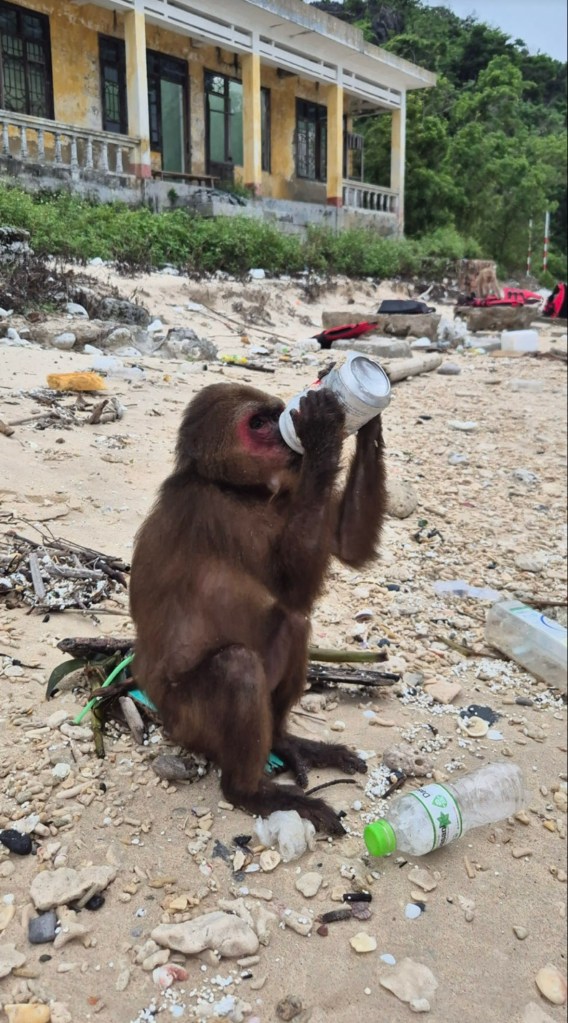
The next day, we joined a boat tour around the islands of Cat Ba and Ha Long Bay. During the tour we visited Turtle Island, went kayaking through the cliffs, and stopped at a floating fish farm. One of the beaches we visited was home to two monkeys. We watched them drink from empty bottles and cans left behind by tourists. It was funny at first, but also quite sad to see how much plastic had washed up on the beach. We did not understand why the boats bringing tourists there did not organize any type of clean-up effort. The monkeys eventually ran onto a random boat and stole some snacks!
Our homestay was about a 15-minute walk from the shoreline, so every evening we walked towards the main street for dinner and wandered back afterwards. We also spent time walking along the newly built boulevard. Although it looked modern and polished, we were a little sad to see how much of the authentic Vietnamese atmosphere seemed to disappear there. One thing we loved throughout Vietnam was how people often lived inside or behind their shops. Hairdressers, for example, would have sofas and televisions inside, where the family spent their evenings together after work. Along the boulevard, however, it felt like large pieces of land had been reclaimed from the sea and modern buildings were rapidly replacing the local character of the island.
A typical Vietnamese lunch or dinner often consisted of plain rice served with several small dishes to share: stir-fried vegetables, tofu in tomato sauce, meat, fresh herbs, and fruit. Everything was eaten with chopsticks. One thing we had already noticed earlier in the trip, but which stood out again in Cat Ba, was how shops also functioned as family living spaces. Hair salons, convenience stores, and restaurants often had televisions, hammocks, or couches in the back where families relaxed together in the evening.
Hanoi
Our final destination in Vietnam was Hanoi. After spending time on an island, we had to get used to the busy city life again. Compared to Ho Chi Minh City, the streets of Hanoi felt much narrower and more crowded. Sidewalks were packed with scooters, street food stalls, tiny plastic stools, and people sitting outside. At times, it honestly felt like walking through an anthill.
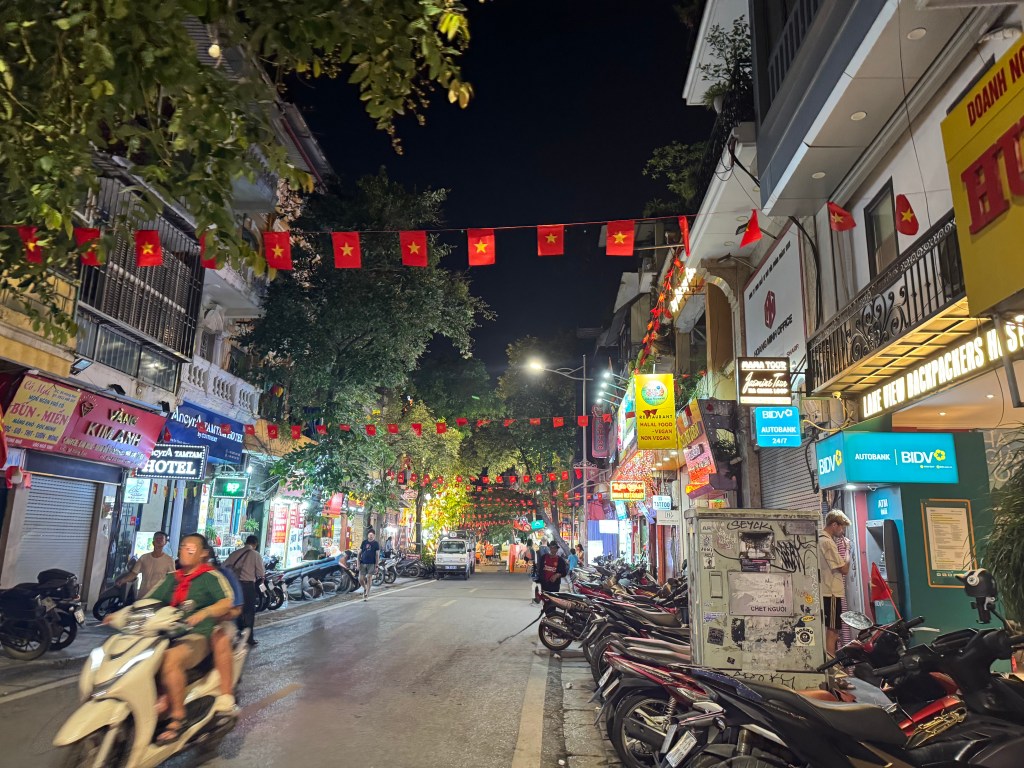
We spent our days wandering through the city. We stopped for coffee, explored vintage shops, and tried different local dishes. Of course, we also went to the famous train street! During our stay, Vietnam was preparing to celebrate 80 years of independence, so the entire city was decorated in red flags and national banners. There were also many Vietnamese tourists visiting the capital, making the atmosphere even livelier.
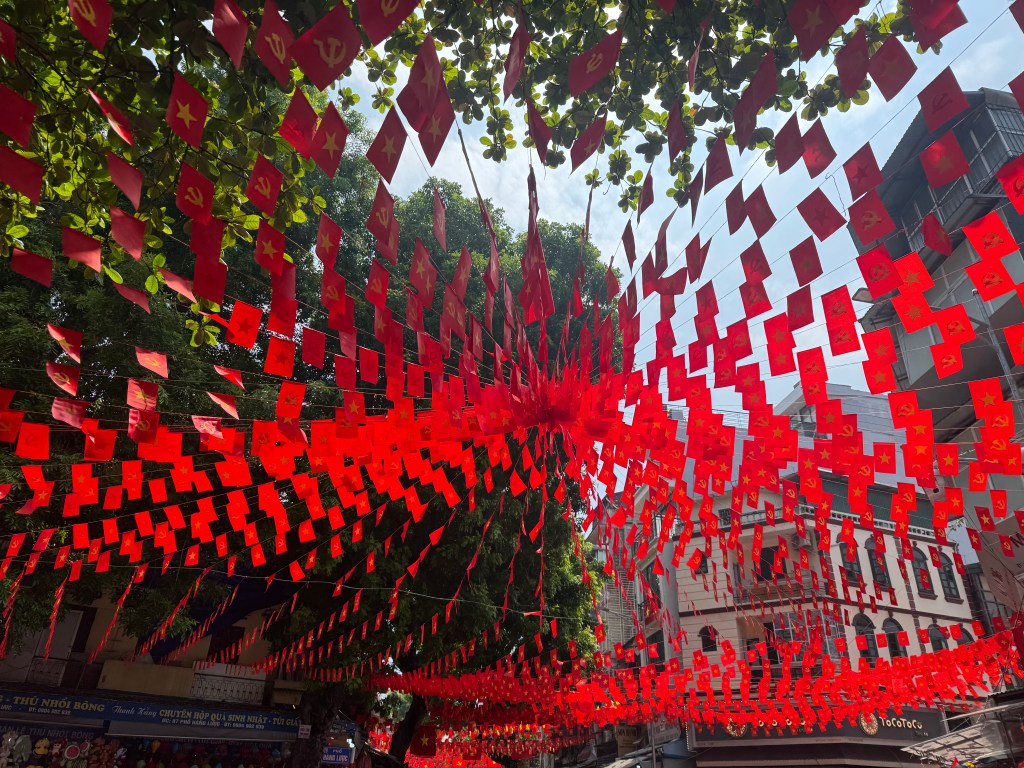
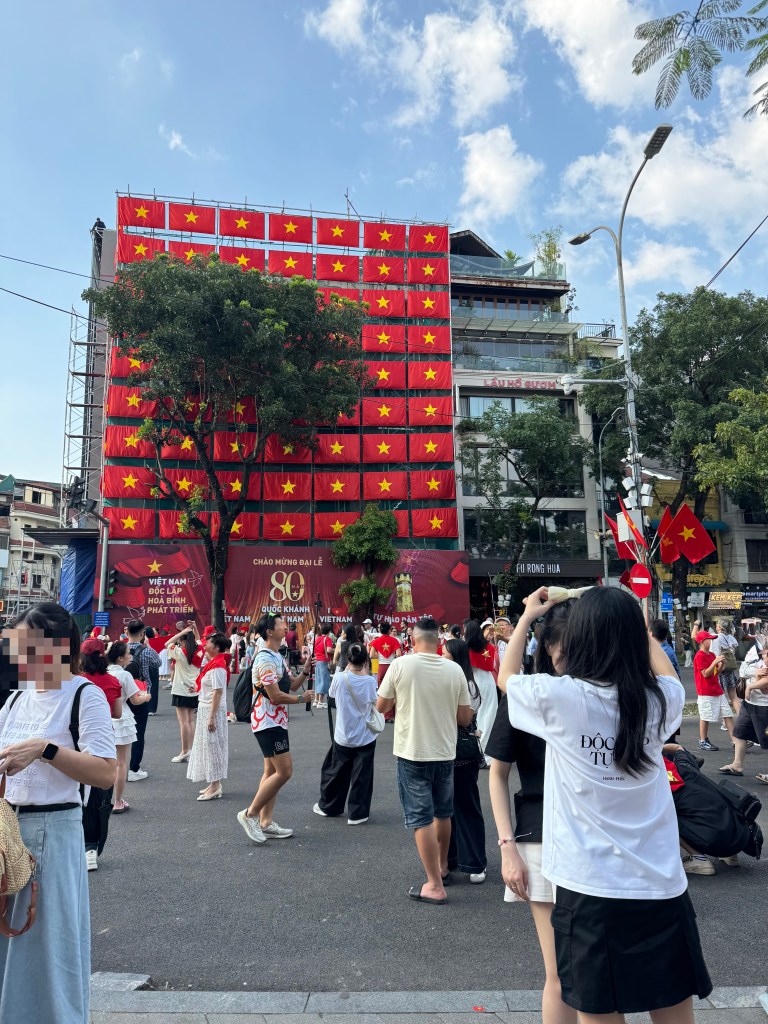
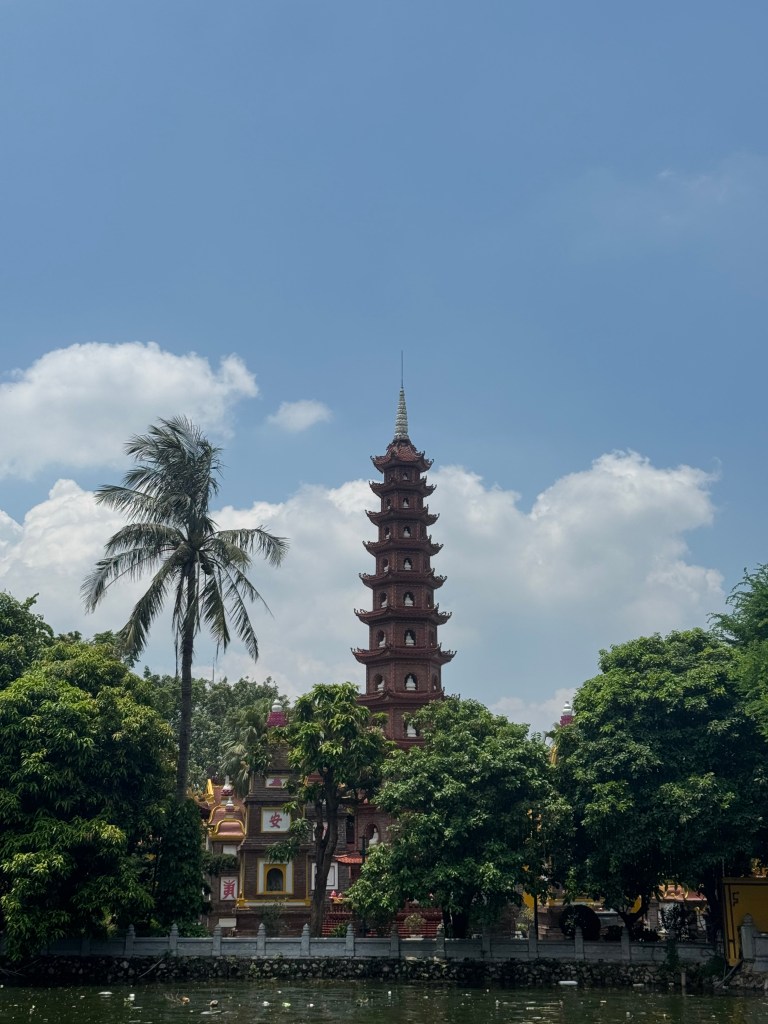
We liked Hanoi and its fun shops, lively atmosphere, and endless little streets to explore. It was a good final destination to end our trip through Vietnam.
Our itinerary for Vietnam
For a reference, our initariy looked like this:
| Date | Location | Nights |
| 3 August | Ho Chi Mihn City | 1/3 |
| 4 August | Dagtip Mekong Delta | 2/3 |
| 5 August | Ho Chi Mihn City | 3/3 |
| 6 August | Hoi an | 1/3 |
| 7 August | Hoi an | 2/3 |
| 8 August | Hoi an | 3/3 |
| 9 August | Phong Nha | 1/2 |
| 10 August | Phong Nha | 2/2 |
| 11 August | Nihn Bin (Tam Coc) | 1/2 |
| 12 August | Nihn Bin (Tam Coc) | 2/2 |
| 13 August | Sapa | 1/4 |
| 14 August | Sapa | 2/4 |
| 15 August | Sapa | 3/4 |
| 16 August | Sapa | 4/4 |
| 17 August | Ha Giang Loop | 1/3 |
| 18 August | Ha Giang Loop | 2/3 |
| 19 August | Ha Giang Loop | 3/3 |
| 20 August | Cat ba / Ha Long Bay | 1/3 |
| 21 August | Cat ba / Ha Long Bay | 2/3 |
| 22 August | Cat ba / Ha Long Bay | 3/3 |
| 23 August | Hanoi | 1/2 |
| 24 August | Hanoi | 2/2 |
| 25 August | Hanoi | Flight back home |
The biggest cultural differences we noticed between Vietnam and The Netherlands
Scooters everywhere
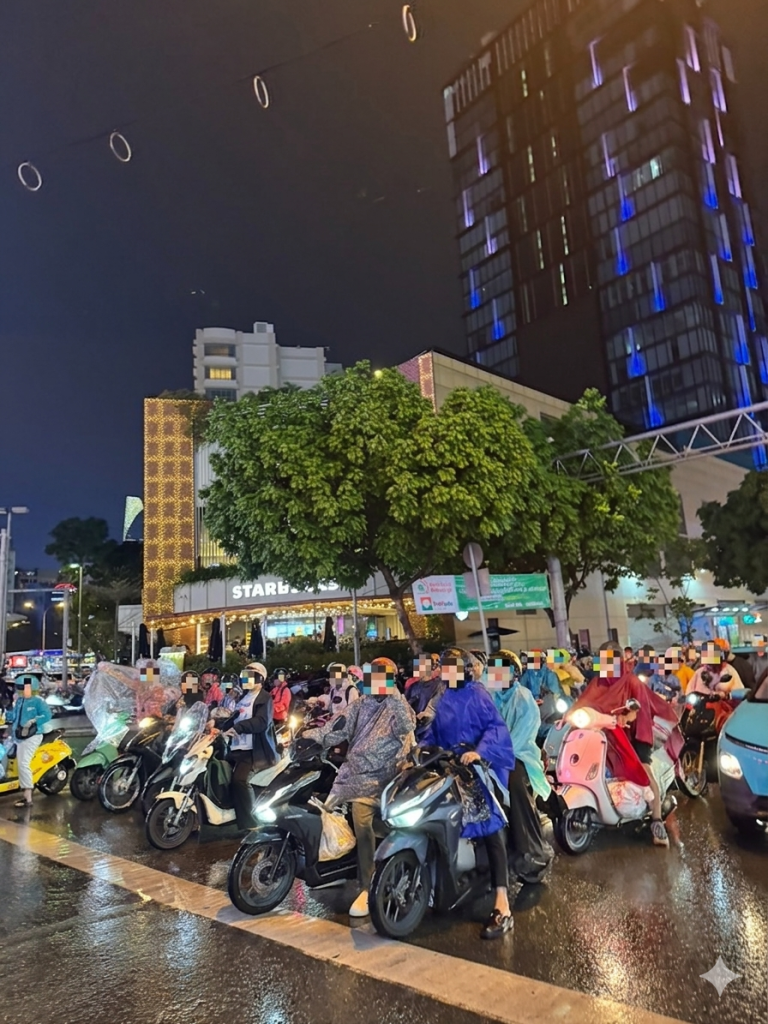
One of the biggest cultural differences was definitely the use of scooters. In cities like Hanoi and Ho Chi Minh City, scooters completely dominate the streetscape. They are used for absolutely everything: commuting, transporting entire families, carrying furniture, animals, groceries, or huge piles of goods. Because cars are expensive and streets are often narrow and crowded, scooters are the perfect solution for daily life.
The tiny plastic stools
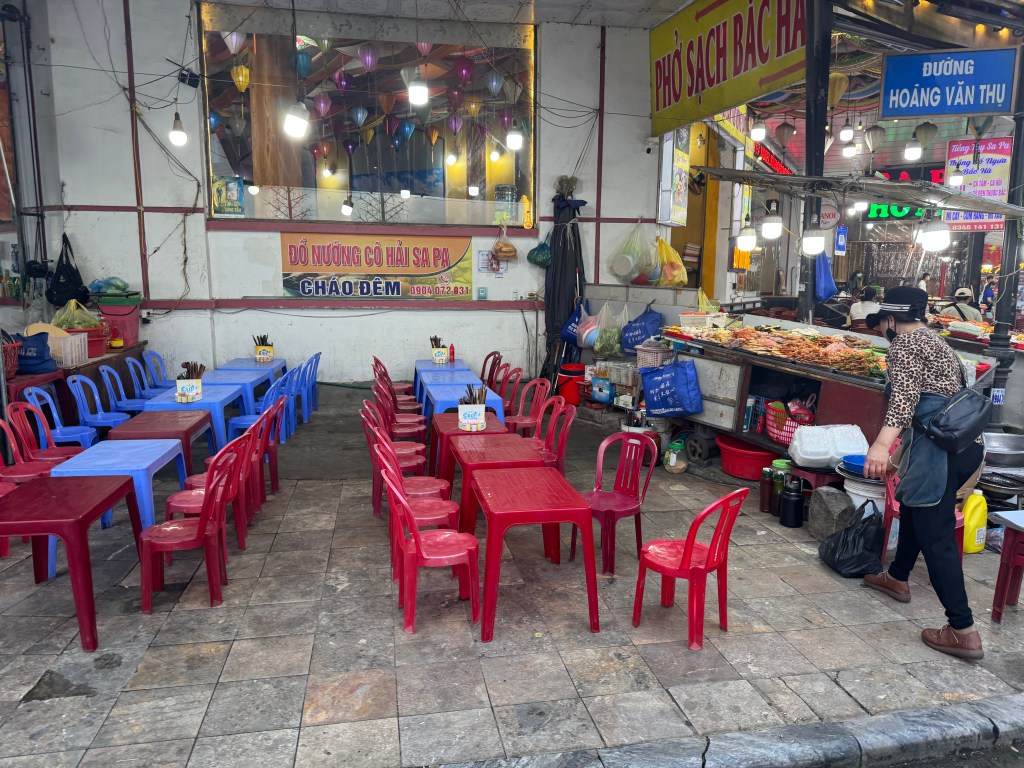
Another thing we noticed everywhere in Vietnam were the tiny, colorful plastic stools. These miniature chairs completely transform sidewalks and alleys into lively cafés and street food spots in the evenings. Their small size makes them easy to move around, which is useful because many food vendors need to quickly clear the sidewalks if necessary. They create a very informal and social atmosphere where locals and tourists gather together to enjoy dishes like phở or bánh mì.
Fresh markets and bargaining
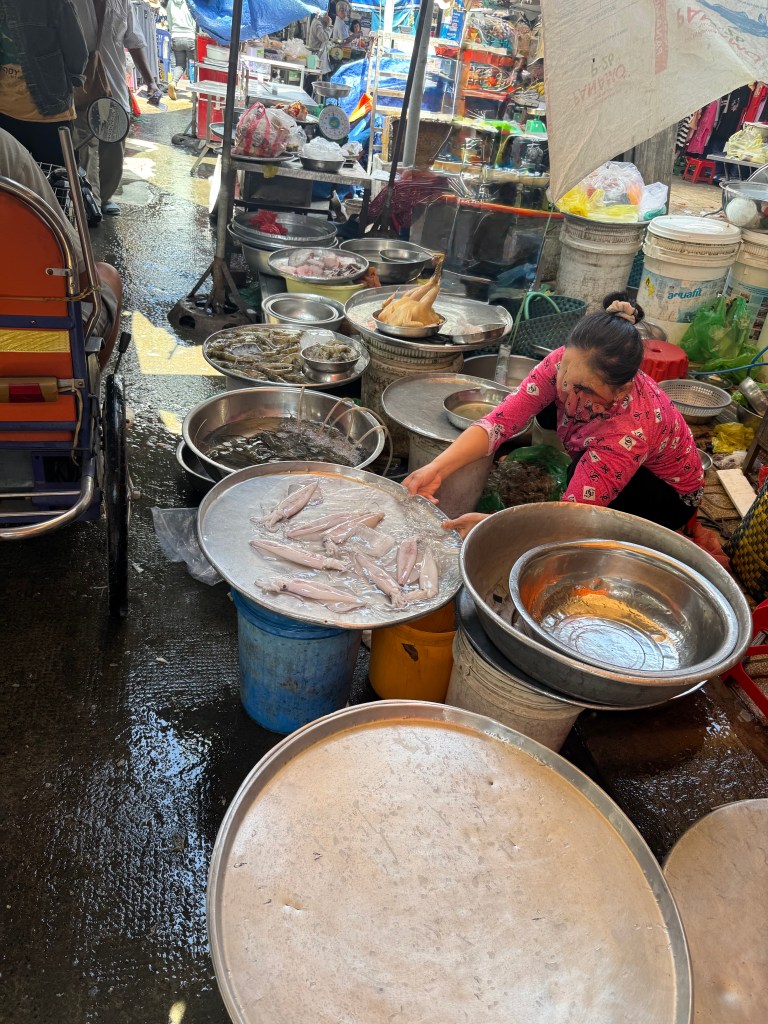
Shopping culture also felt very different from home. In Vietnam, many people buy fresh ingredients daily at local “wet markets.” Meat, fish, vegetables, and herbs are displayed openly and sold fresh each morning. Bargaining is also completely normal at markets, something we are definitely not used to in The Netherlands.
The relationship with the sun
Another interesting difference was the way people deal with the sun. In Vietnam, many people cover themselves completely while driving scooters: hoodies, gloves, masks, and even extra layers over their clothing. Having lighter skin is often associated with beauty and status, so people try to avoid tanning. In The Netherlands, it is almost the opposite. As soon as temperatures rise above 20 degrees, parks fill with people trying to get as tan as possible in the sun.
After three incredible weeks, our time in Vietnam came to an end. We are extremely grateful for all the experiences we had and for everything we learned about Vietnamese culture and daily life. Vietnam is a beautiful, welcoming, and incredibly diverse country to visit. From busy cities to rice fields, mountains, and jungles, every place felt completely different from the last.
We will definitely miss being here.
 Kimmie
Plaats een reactie