From Java, we travelled further to Bali, which felt like a whole different experience.
Balinese culture
Even though Java and Bali are two islands next to each other, Bali has its own rituals and culture. On Bali, the common languages are Bahasa and Balinese. The dominant religion in Bali is Balinese Hinduism, a unique form of Hinduism that incorporates local animist beliefs and ancestor worship. The culture is a vibrant blend of Hindu and Buddhist influences, and is expressed through rituals, temples, daily offerings (canang sori), festivals, traditional dances, and music.
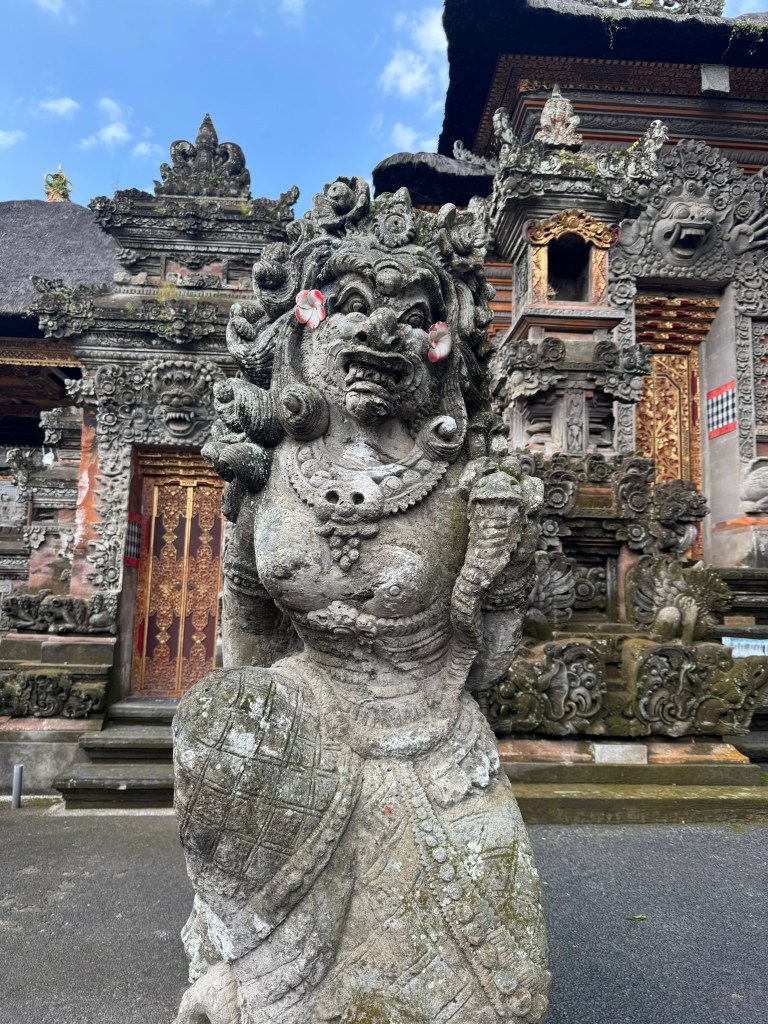
Colors play an important role in everyday life: white symbolizes purity, while yellow represents victory. Many locals live in small villages consisting of their family houses, forming tight-knit communities. Temples are ubiquitous in Bali, not just in the main towns, but also in individual family villages. Visiting these temples gives you a sense of the devotion that permeates daily life. We did not have time to stay in Bali for longer and visit more cities, but we did get to visit Ubud and Sanur.
In contrast to the other Indonesian islands, alcohol is easily obtained in Bali. The island is sort of a party island for Australian tourists, with a noticeable bar/club culture.
Our time in Ubud
Ubud is a lively town that can feel a bit busy and westernized, yet it serves as a great base to explore the island. Almost every restaurant and hotel overlooks lush rice fields, which provide a peaceful backdrop to the busy streets.
On our first day, we walked into the center of Ubud and stumbled upon the Ubud Dalem Temple. For one euro per person, we could explore the temple. We took some time to take it all in. After leaving the temple and walking a bit further, we quickly realized how many temples there are in Bali. Almost every family has its own small temple in their village—a fact we learned later during a countryside biking tour.
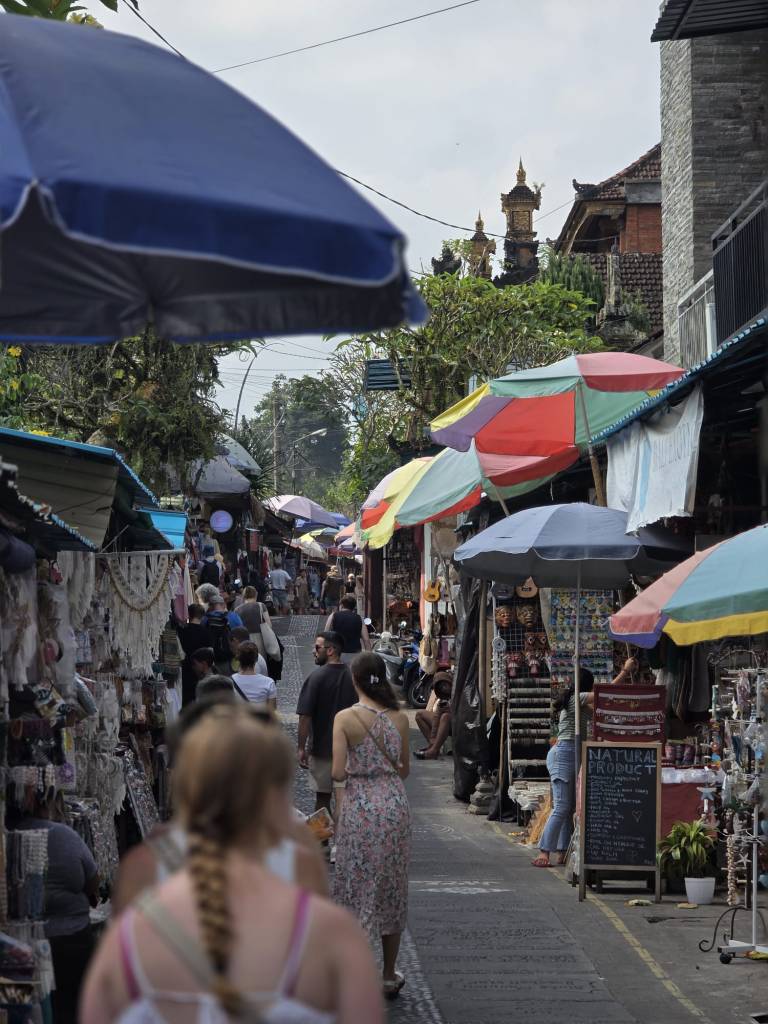
We also visited the Ubud Street Market, where we had our first experience with bargaining. It didn’t go that well for us, but it was fun to try! Afterwards, we stopped at the Water Palace, the Ubud Palace, and the Ubud Art Market.
The Water Palace has a classical Balinese atmosphere, with a lotus pond, a stone walkway, a sarong, and a temple backdrop. Ubud Palace still belongs to the royal family and now blends Ubud’s heritage, royal history, and art with tradition. The Ubud Art Market was also fun to walk through, though overwhelming with many people and the endless items for sale.
Nature on Bali
In Bali, there are plenty of walks to do, we did the Kampuhan Ridge Walk, which was quiet and peaceful compared to the busier parts of town.
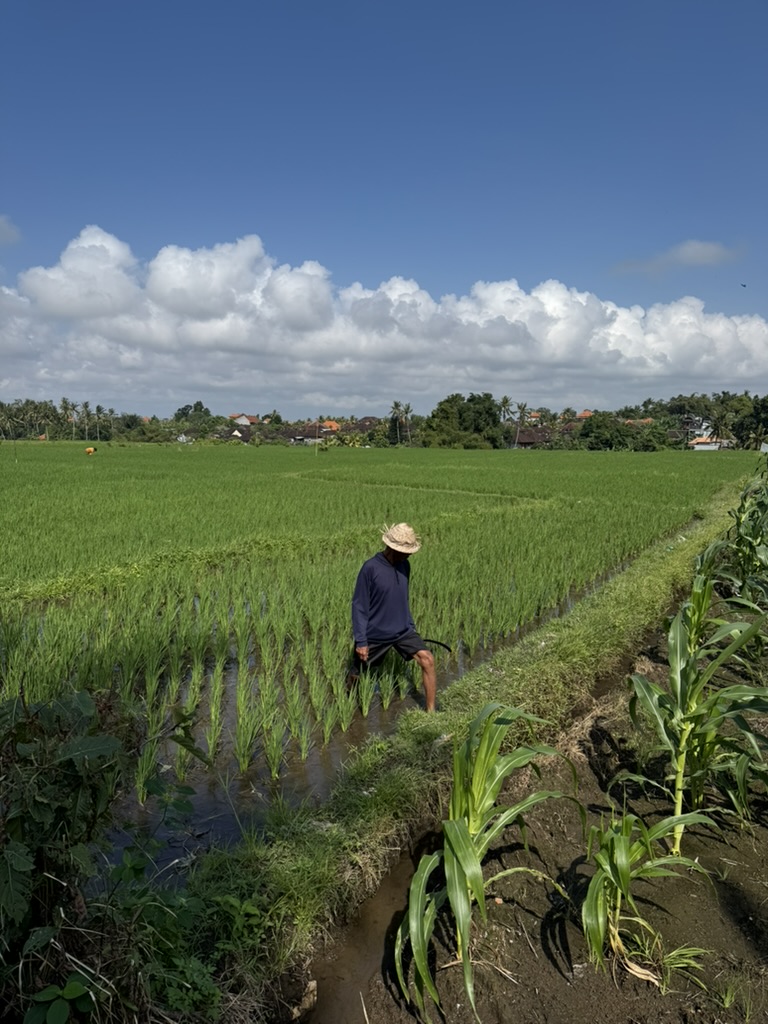
As true Dutchies, we could not resist doing a biking tour! We took a biking tour through the countryside of Bali, which was a stark contrast to Ubud. The countryside was quiet, and the locals were very kind, waving at us and saying hi as we passed. Our local guide was friendly and taught us a lot about history, local culture, and rituals. He explained that ‘Ogoh-ogoh’, which are large statues of mythical monsters, are designed to attract evil spirits, which are then believed to be banished from the village. The tour guide also told us about a special ritual: Ma’nene. It was one of the most unique traditions we encountered and involves exhuming the bones of deceased family members, an event that reflects the Balinese approach to life and death. Preparations take months, and it is considered an important part of honoring one’s ancestors. I would highly recommend doing a cycling tour, it’s a great way to see a different side of Bali!

Local life and cultural differences
In Ubud, we also took our first scooter ride with Grab, which was a fun experience. It felt like a race to see who would arrive first at the destination. Through Grab, we met a taxi driver who arranged an island tour with his son for us. His son was 23, married, and expecting his first child. My sister and I are 22 and 20, not even thinking about getting married or having children. We also live with roommates, both girls and boys, which would be unnatural in Indonesia, as you only live together if you are married. This is such a stark contrast in lifestyle and culture, almost incomparable to each other, as we live in completely different worlds.
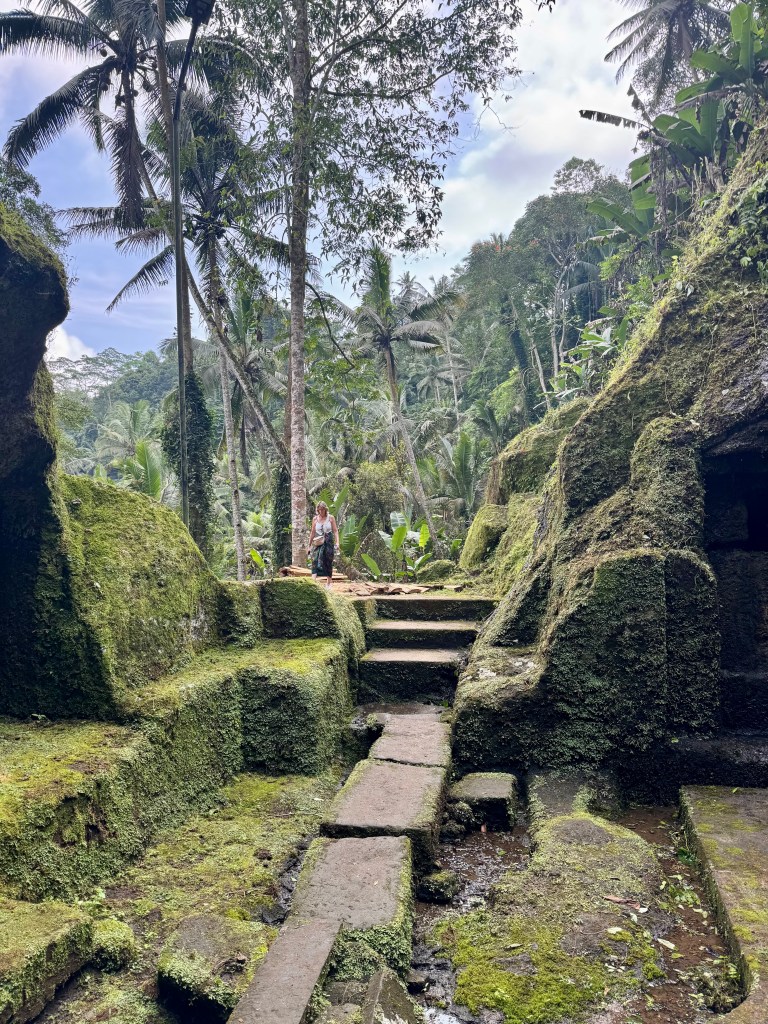
He took us to see the rice fields of Tegalalang and the Gunung Kawi Temple. I was especially impressed by Gunung Kawi. I did not expect what awaited us when we climbed down the stairs: a large natural temple. After saying “Selamat Pagi” to a local, we got into a conversation where he told us about preparations for the Ma’nene ritual.

To be honest, we were finished quite quickly at the rice fields. They were beautiful, but very touristy and overhyped. It felt more like a social media spot than a real experience, which wasn’t exactly what we were looking for.
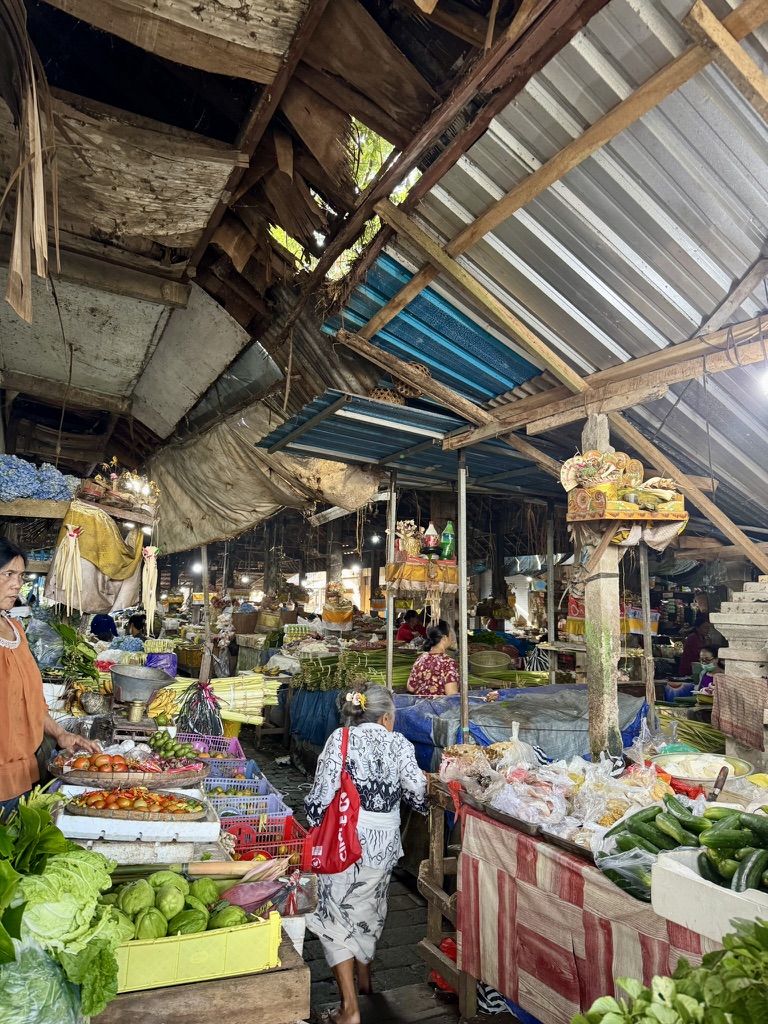
On our last day in Ubud, we joined a cooking class. We woke up early to visit the local market before heading to a family home where the class took place. It was interesting to see how such a big family lives together in their own “family village,” and how locals get fresh products from the market or directly from their fields. We cooked a five-course meal for ourselves, which was lovely.
Sanur
After Ubud, we headed to Sanur, a beach town with lots of good restaurants and an overall relaxed vibe. We spent a few days here visiting markets, shopping, and relaxing at the beach. It was the perfect place to unwind and enjoy a few slower days.
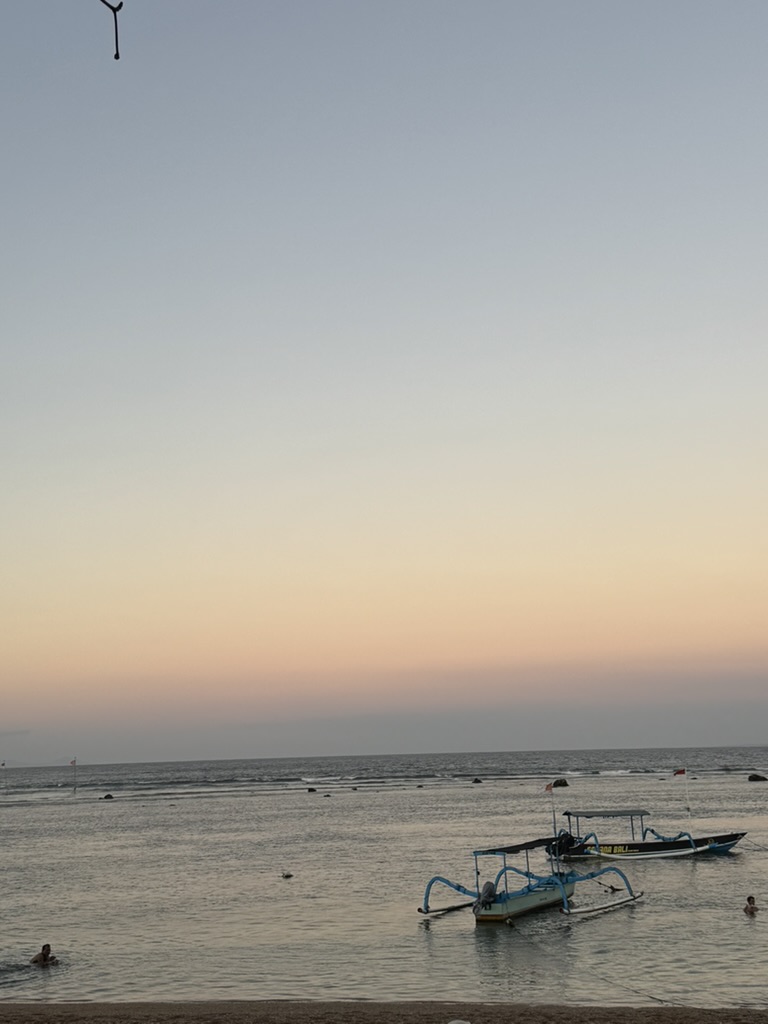
We left wishing we had more time to see the island. With everyone on social media talking about how amazing Bali is, we kind of expected to feel that too, but personally, it wasn’t quite the same as what we experienced on Java. Maybe if we had more time to explore, we would have discovered that side of Bali. Either way, that just gives us a reason to return.
Next up is our time on the Komodo Islands!
 Kimmie
Plaats een reactie