
Java
Reflecting on my time in Indonesia, I recall a warm and cozy feeling. The people, the atmosphere, the landscapes — everything feels alive. Among all my travels, Java felt like a journey straight through the heart of Indonesia. It’s a place of contrasts: vibrant chaos in the markets and on the roads, yet serenity in its temples, villages, and rice fields.
In just a handful of days, we experienced surreal sunrises over volcanoes, explored ancient temples, and met some of the kindest people we’ve ever encountered. This article is, quite simply, a love letter to Indonesia and, in particular, to the island of Java.
Java is Indonesia’s most densely populated island, with around 157 million inhabitants. Its narrow, elongated shape makes it easy to travel from west to east, offering a diverse journey along the way. The island is divided into three main provinces: West Java, Central Java, and East Java. While most of Java’s population is Muslim, the island is also home to stunning Hindu temples, reflecting its rich and layered past. As you travel through Java, you’ll encounter 35 active volcanoes among its 112 total volcanic peaks, which shape both its landscapes and fertile soils. The tropical climate is consistently hot and humid, with a rainy season that spans from October to April. Agriculture plays a major role in daily life, alongside marine fishing and industrial activity. Java is also home to several UNESCO World Heritage sites, including the iconic Borobudur Temple.
Java’s history is as vibrant as its landscapes. In its early centuries, both Hinduism and Buddhism played important roles and coexisted on the island. Later, Islam spread across the island, leaving a lasting spiritual and cultural influence. The Dutch colonized Java during the colonial era, followed by a period of Japanese occupation during World War II. Many ancient sites still bear the marks of earthquakes, wars, and the passage of time. Yet they remain standing, silent witnesses to centuries of change. This history has created a multicultural island, where traditions overlap and coexist.
Religion plays a central role in daily life on Java:
- Islamic traditions: Prayers are held five times a day, and mosques are found in every neighborhood. Everywhere we drove, we saw multiple mosques in the area. Drinking alcohol is limited, and visitors are expected to dress modestly when entering sacred spaces, covering their shoulders and knees.
- Hindu traditions: Hinduism remains alive in certain regions, with temples and practices like keeping birds or animals at home for good luck. The elephant is a symbol of wisdom.
Respecting local customs goes a long way. Javanese people are warm and welcoming, often eager to strike up conversations or take photos with visitors, especially students looking to practice their English.
Indonesia is a land of collectivism, where people often spend time outdoors, interacting and building strong community ties. The streets are alive with scooters carrying entire families, billboards, street food stalls, electrical wires, and small shops. Despite the seeming chaos of traffic, it flows organically, as though everyone is tuned into an unspoken rhythm. Hospitality is genuine. Locals often greet travelers with smiles and curiosity, asking where you’re from or even requesting a photo together. There’s a sense of living in the present: “We work for today; tomorrow will take care of itself.”
Every meal in Java for local people contains rice. Rice is a staple, served with dishes like nasi goreng (fried rice), mie goreng (fried noodles), tempeh, tofu, chicken, or beef. Tropical fruits, such as watermelon and snake fruit, are common after meals. Traditional sweets are often made from rice or palm sugar, and tea or coffee (including kopi luwak coffee) is served throughout the day. The island’s fertile lands also produces turmeric, cinnamon, vanilla, cacao, coconut milk, pepper, and more. There are lots of plantages of different kinds of food. Our Java guide, Dito, told us that you cannot leave Java if you have not tried a Javanese apple!
Highlights of Java
Yogyakarta
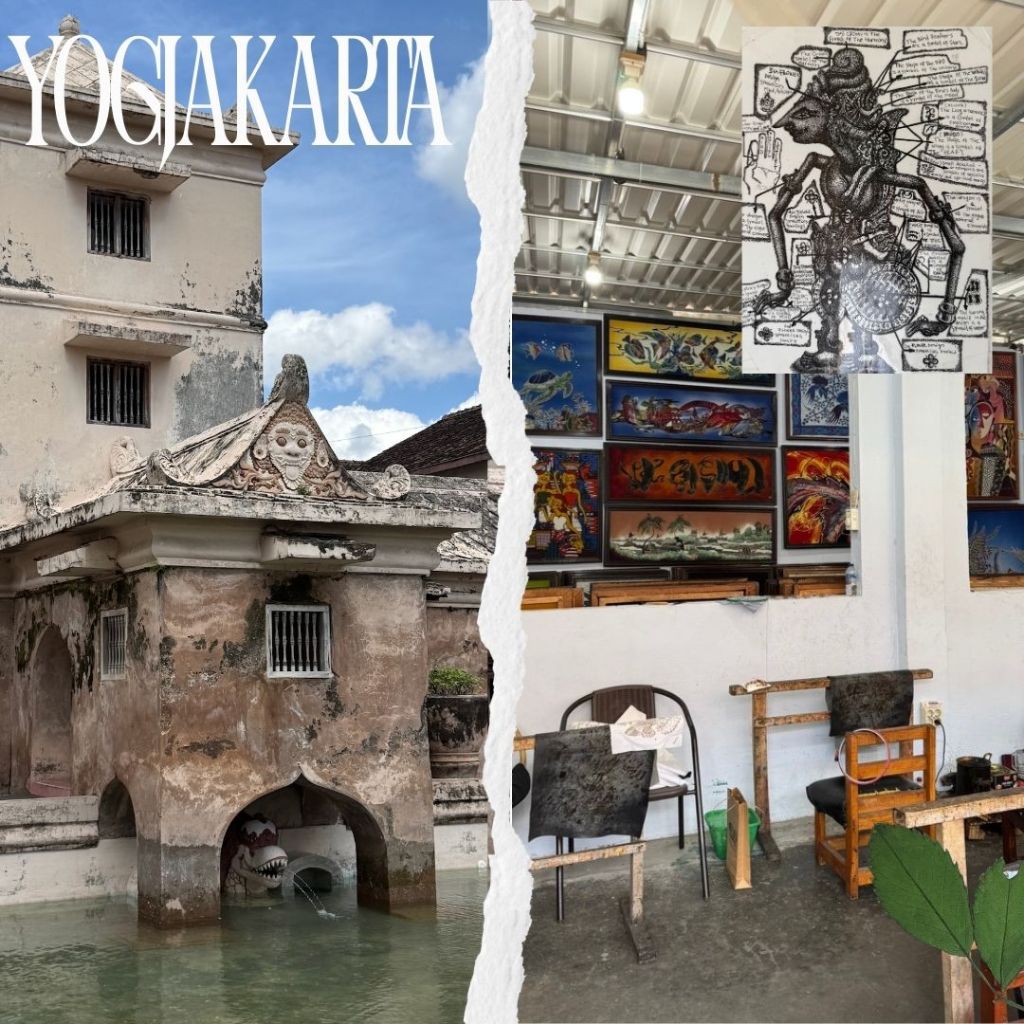
Often referred to as the cultural heart of Java, Yogyakarta is home to the Sultan’s Palace, the Taman Sari Water Palace, and notable museums such as the Sono Budoyo. When we arrived, it was the start of the new school year, and the city was full of children in uniforms. In the evenings, the streets came alive as people gathered on every corner, sipping coffee or tea and chatting late into the night. Yogyakarta is also renowned for its rich tradition of handicrafts, ranging from intricate silversmithing to the art of batik — making it the perfect destination for finding unique souvenirs.

Borobudur Temple
Borobudur is one of the most stunning sights in Indonesia and a UNESCO World Heritage site. This colossal Buddhist monument is the largest of its kind in the world. Built in the form of a giant mandala, it represents the Buddhist vision of the universe, with a square base symbolizing Earth and circular terraces above symbolizing Heaven.
Walking through its multiple levels feels like a spiritual journey, as the intricate stone carvings narrate the story of Buddha’s life and teachings (the Dharma). There are more than 500 serene Buddha statues throughout the complex, although many are missing heads. The bell-shaped stupas are said to bring good karma in the next life. To help preserve the site, we were given slippers to wear instead of regular shoes.
Prambanan Temple
Prambanan is a magnificent Hindu temple complex dating back to the 9th century. It features three main temples dedicated to the three great Hindu deities: Shiva, the Destroyer, Vishnu, the Preserver, and Brahma, the Creator. Nearby stand three smaller temples honoring the animals that serve them.
The central Shiva temple, originally known as Siwagrha (Sanskrit for “House of Shiva”), houses a striking three-meter-tall statue of Shiva Mahadeva, reflecting the god’s importance in the complex. Although Prambanan once had around 240 temples, only 18 have been fully restored — the rest remain scattered ruins. The main Shiva temple consists of five chambers, each facing a different direction, with the central chamber dedicated to Shiva himself. Exploring the site feels like stepping back in time to an ancient spiritual center.
Malang
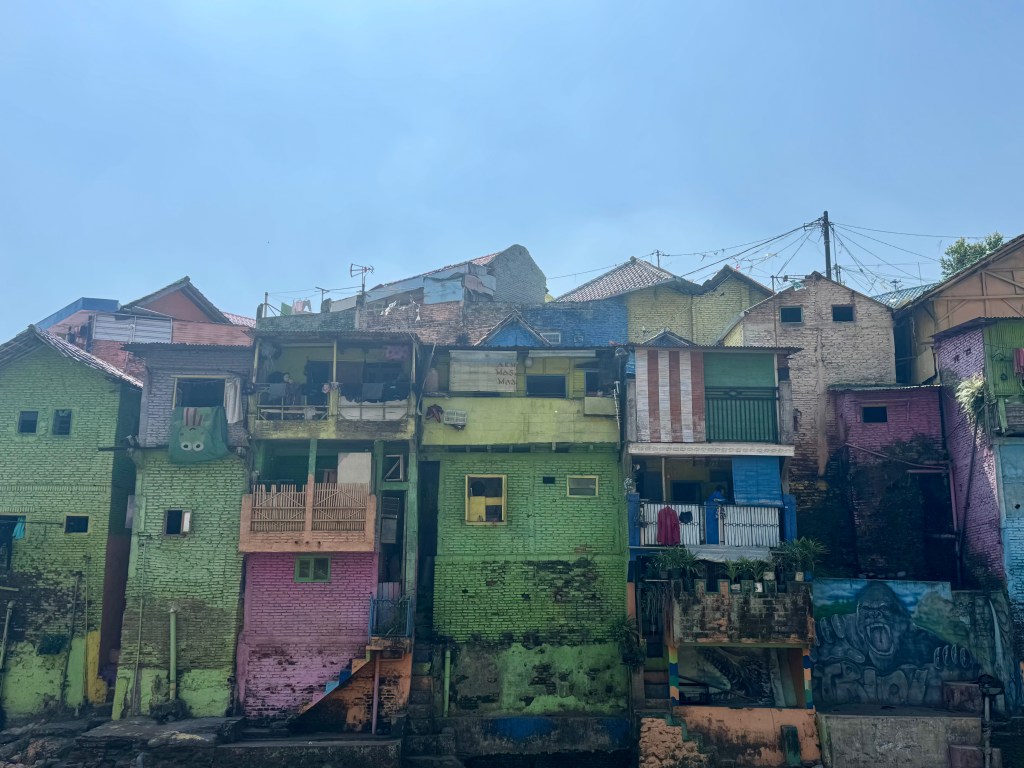
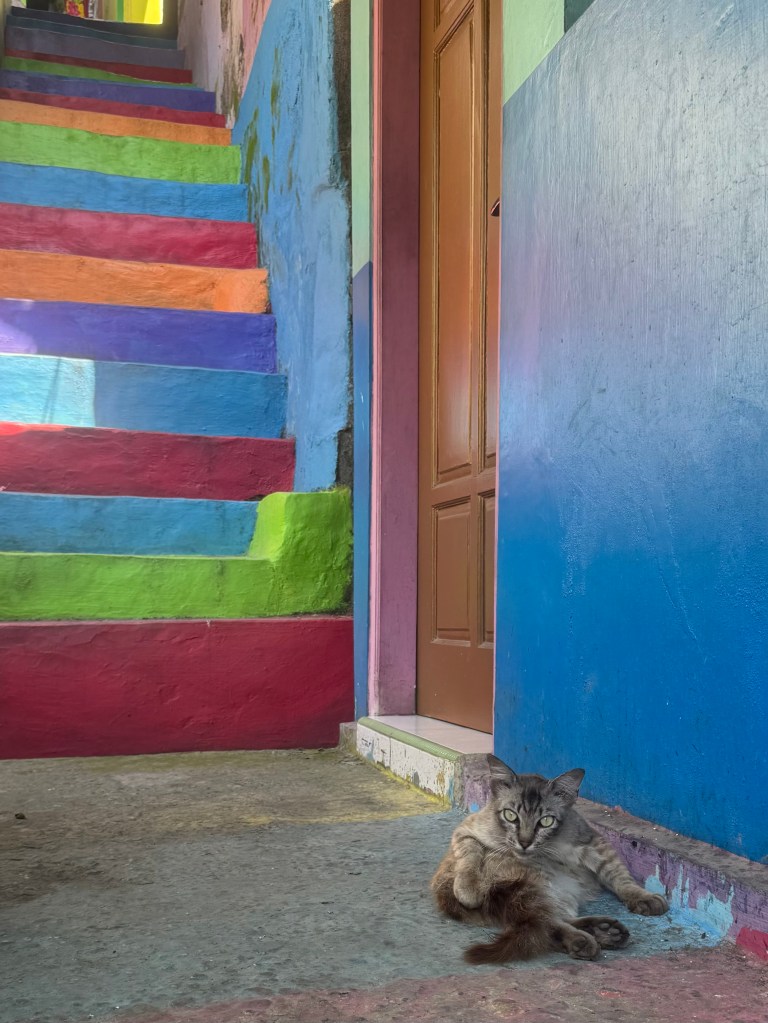
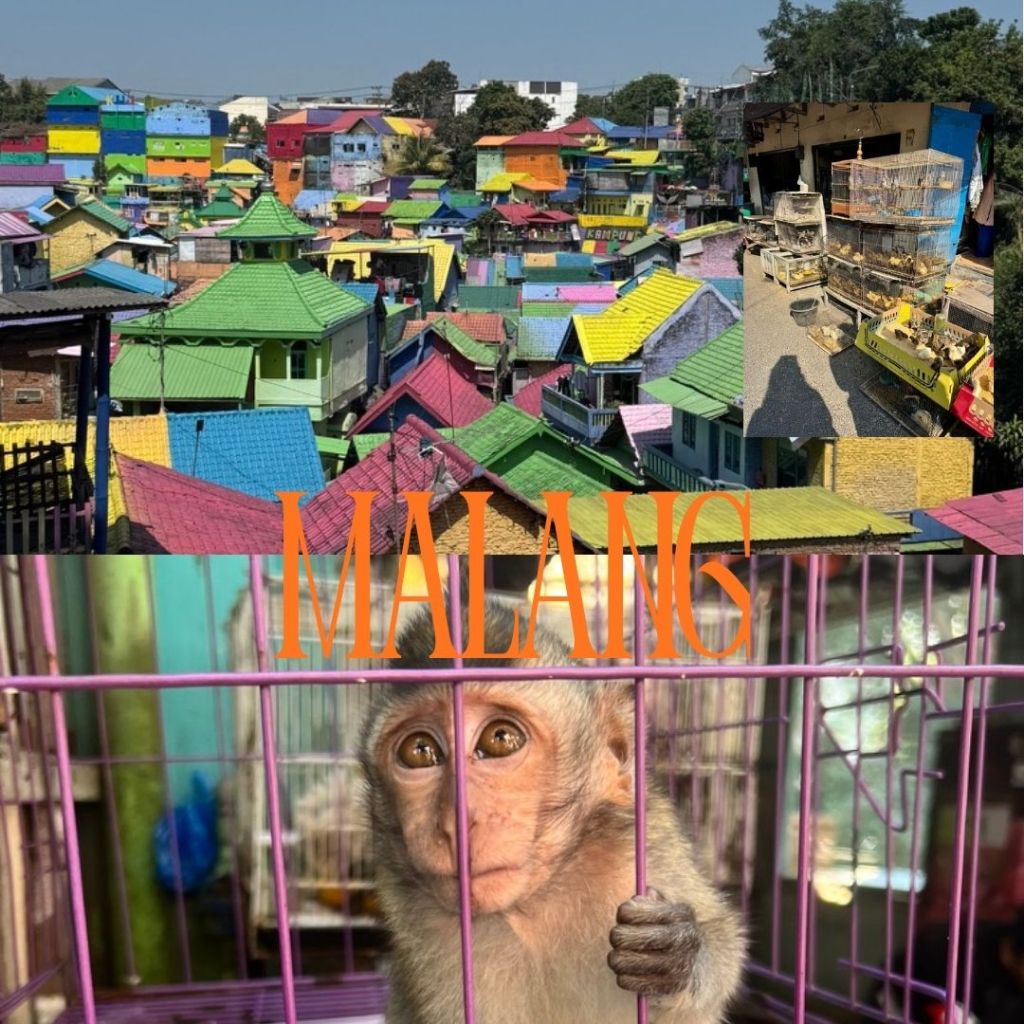
Malang charmed us with its colorful neighborhoods, colonial-era monuments, and friendly locals eager to hear our stories. One highlight was visiting the vibrant Jodipan Rainbow Village. Once a slum, it has been transformed into a living art project with brightly painted houses and murals in every color imaginable. A small entrance fee goes toward supporting the local community, making the visit even more meaningful.
In contrast, the city’s bird market was a sobering experience. It was heartbreaking to see monkeys, birds, dogs, and other animals crowded into small cages, many exposed to the blazing sun. Later, we visited Alun-Alun Malang, the city’s central square, where families gathered on a Sunday afternoon to relax and spend time together, offering a glimpse of everyday local life. Students came up to us, asking if we could help them practice their English.

Mount Bromo
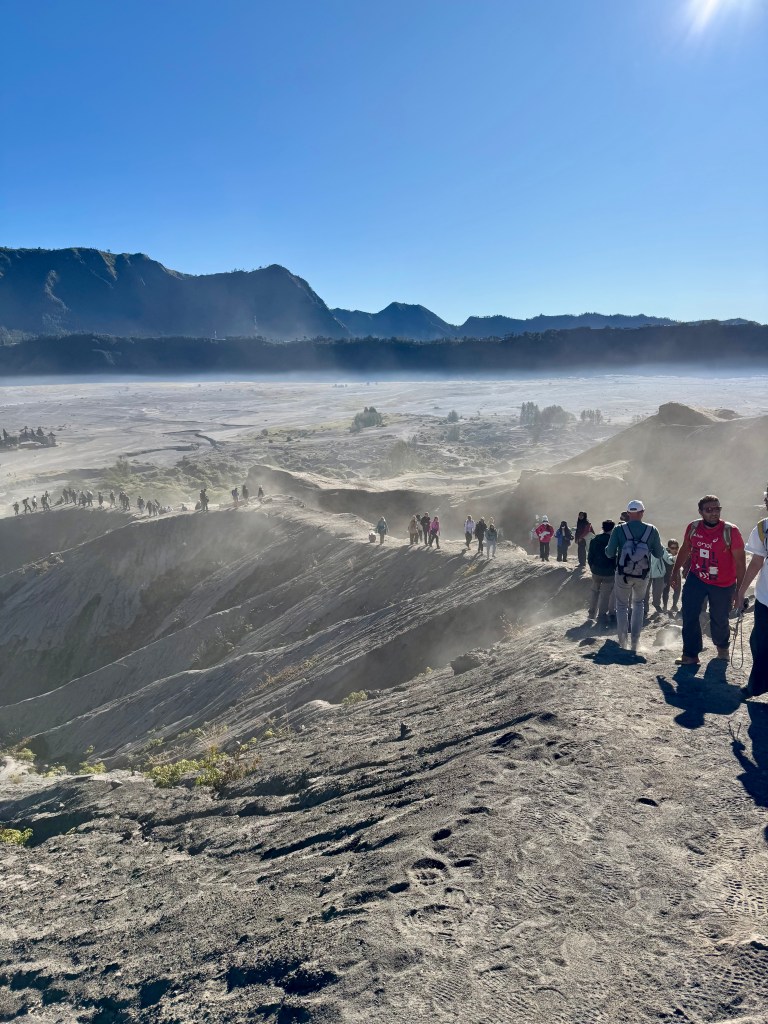
Mount Bromo is famous for its dramatic volcanic landscape, colorful jeeps, and unforgettable sunrises. To reach the viewpoint in time for sunrise, we woke up in the middle of the night and faced the freezing pre-dawn air. Wrapped in blankets, waiting as the first light illuminated the surrounding volcanic peaks.
The landscape is otherworldly — an expanse of ash and sand known as the “Sea of Sand,” with Mount Bromo rising in the distance. After crossing the sandy plain, a climb of about 250 steps takes you to the crater’s edge. Surprisingly, there are almost no fences, so you need to be very careful near the rim. The air smelled strongly of sulfur, but the view into the smoldering crater and across the vast volcanic terrain was absolutely worth it.

Mount Ijen
Mount Ijen was one of the most surreal and unforgettable experiences of our journey. Known as the most toxic volcano in the world, it is home to Lake Kawah Ijen — a striking milky turquoise crater lake with extremely acidic waters, created by dissolved volcanic gases.
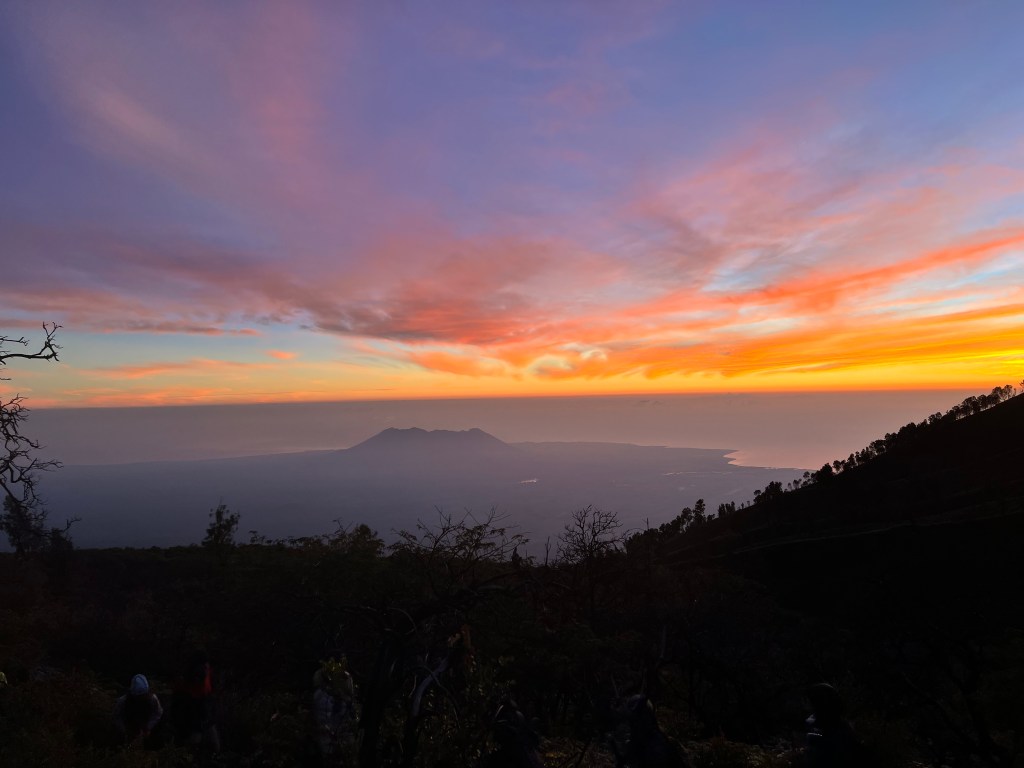
The climb begins in darkness, taking about three hours along a steep but manageable trail. Hiking at night feels mysterious, as you can’t see the landscape around you — only the lights of distant villages far below. As you ascend, the sharp smell of sulfur grows stronger. Unfortunately, the stairs leading to the famous blue fire were destroyed by natural weathering, making it too dangerous to approach.
As the sun began to rise, the lake and its surroundings slowly revealed themselves in a burst of color, creating a magical view. Along the way, we passed hardworking sulfur miners carrying heavy loads up and down the mountain — a dangerous and grueling job still done using traditional methods. Locals offered rides on small carts they called “Ferraris” or “Lambos.”
Witnessing Mount Ijen, along with its beauty and harsh realities, was a humbling reminder of nature’s extremes and the resilience of the people who live and work there.
Traveling through Java is not just about the sights — it’s about the people, the culture, and the way life flows. From the warmth of strangers to the beauty of ancient temples, from chaotic streets to peaceful rice terraces, Java offers an experience like no other.
It’s a place where history breathes, nature dazzles, and every interaction feels meaningful. And for me, it remains one of my favorite places I’ve ever had the privilege to visit.
 Kimmie
Plaats een reactie